
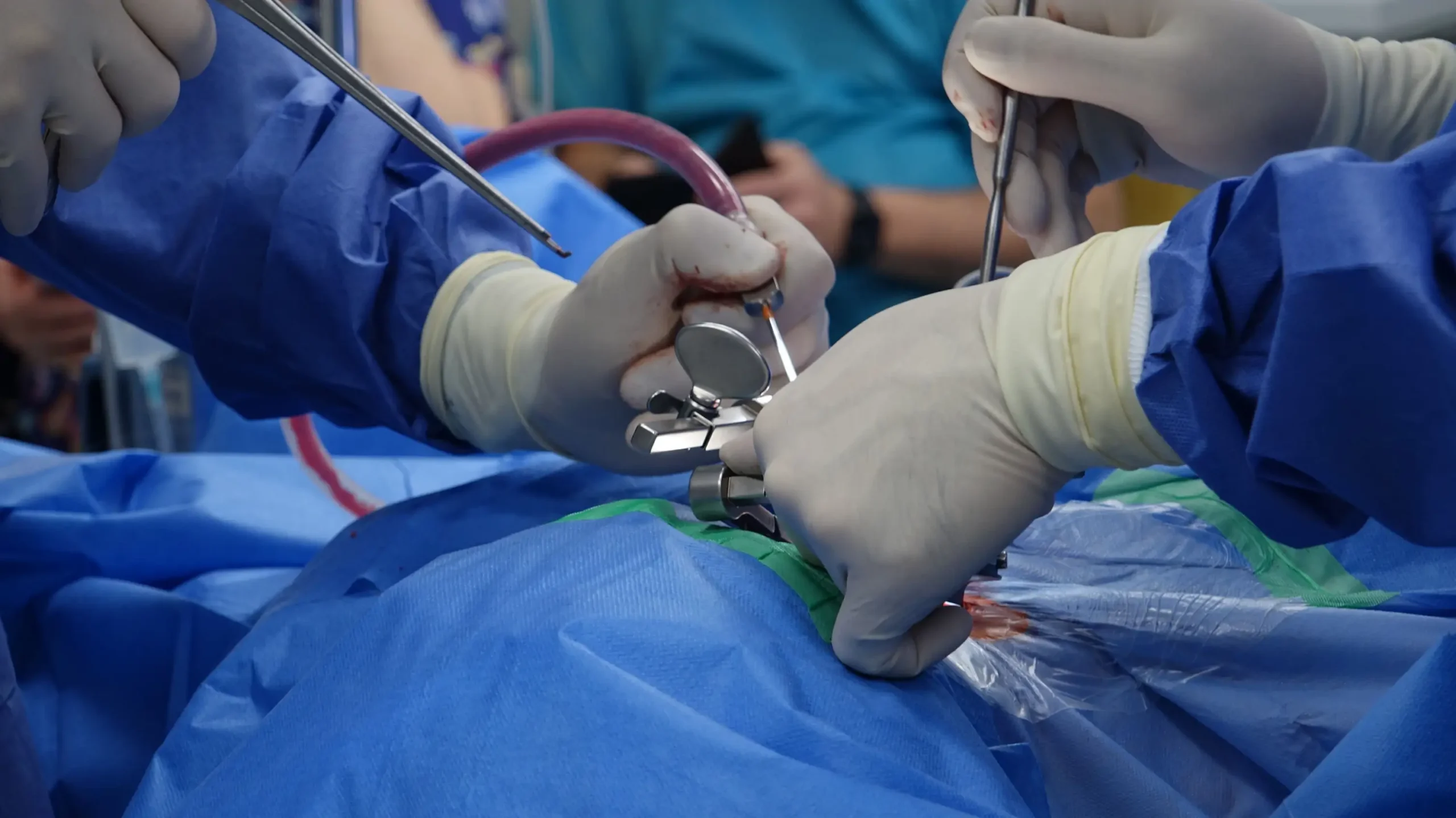



1. Coronary Artery Bypass Surgery (CABG): When Do You Need Bypass?
“I have blocked coronary arteries. Do I need bypass surgery?”
Not necessarily.
Some patients are treated with medication and coronary stents, while others may benefit more from CABG depending on the location and complexity of coronary disease.
Recent ACS guidance emphasizes that the choice between CABG and PCI should consider coronary complexity and comorbidities.
❓ Is bypass better than a stent?
Not universally.
❓ Is CABG open-heart surgery?
Traditional CABG is usually performed through surgical access to the chest, although minimally invasive and off-pump strategies may be used in selected cases.
The question is not “bypass or stent?”
It is “which revascularization strategy is safest and most effective for my coronary anatomy?”
2. Heart Valve Surgery: Repair or Replace?
Your valve is leaking or narrowed. But does it need to be replaced?
Not always.
For some valves—particularly the mitral valve—repair may be possible and preferred when a durable repair can be achieved.
❓ What determines repair vs replacement?
Valve anatomy
Severity
Cause of disease
Heart function
Surgical risk
Repair is not always possible. Replacement is not always necessary.
The answer begins with imaging and specialist assessment.
3. TAVI/TAVR: Can Aortic Valve Replacement Be Done Without Open-Heart Surgery?
Aortic stenosis can become life-limiting. But does treatment always require open surgery?
For selected patients, Transcatheter Aortic Valve Implantation (TAVI/TAVR) can replace the aortic valve through a catheter-based approach.
Current guidelines use age, life expectancy, anatomy, surgical risk and patient-centered Heart Team assessment when choosing between TAVI and surgical replacement.
❓ Is TAVI better than surgery?
Not universally.
❓ Is TAVI suitable for younger patients?
The decision becomes more complex because durability and lifetime treatment strategy matter.
TAVI is revolutionary—but it is not a universal replacement for surgical valve replacement.
4. Mitral Valve Repair & TEER: Can a Leaking Mitral Valve Be Treated Without Open Surgery?
Shortness of breath. Fatigue. Reduced exercise capacity. Your doctor says the mitral valve is leaking.
Depending on the cause and anatomy, treatment may include surgical repair, replacement or transcatheter edge-to-edge repair (TEER).
Current guidelines support TEER in selected symptomatic patients, particularly when surgical risk is high and anatomy is suitable.
❓ Is repair better than replacement?
When a durable repair is feasible, repair is generally preferred for suitable primary mitral regurgitation.
❓ Is TEER for everyone?
No.
The less invasive procedure is useful only when the patient’s anatomy and risk profile make it appropriate.
5. Tricuspid Valve Treatment: What Are the New Catheter-Based Options?
The tricuspid valve used to receive much less attention. That is changing.
The treatment landscape now includes surgical repair/replacement and selected transcatheter interventions.
The 2025 ESC/EACTS guidelines and 2026 ACC/AHA/ASE/HRS/STS consensus recognize an expanding role for transcatheter tricuspid intervention in carefully selected high-risk patients.
❓ Is surgery always necessary?
No.
❓ Is catheter treatment suitable for every patient?
No.
Tricuspid intervention is an excellent example of why modern cardiac care requires specialized imaging and a Heart Team.
6. Minimally Invasive Cardiac Surgery: Can Heart Surgery Be Done Through Smaller Incisions?
“I need valve surgery—but do I have to have a large chest incision?”
For selected procedures, minimally invasive approaches can use smaller incisions than conventional median sternotomy.
STS describes minimally invasive aortic and mitral valve techniques, including mini-thoracotomy and upper hemisternotomy approaches.
❓ Is minimally invasive surgery always better?
No.
❓ Who is eligible?
It depends on anatomy, procedure, previous surgery and surgeon/center experience.
Smaller access is valuable—but safe and effective treatment comes first.
7. Robotic Cardiac Surgery: What Can the Robot Actually Do?
Robotic surgery is not a robot operating independently on your heart.
It is a surgeon-controlled platform providing enhanced visualization and instrument control in selected procedures.
Robotic approaches are used in selected mitral and other cardiac operations.
❓ Is robotic surgery suitable for everyone?
No.
❓ Is it safer?
It depends on the procedure, patient selection and center experience.
The technology matters. The surgeon and the right indication matter more.
8. Aortic Surgery: When Does the Aorta Need an Operation?
The aorta is the largest artery in the body—and diseases affecting it can be serious.
Aortic surgery may be required for selected:
Aneurysms
Dissections
Aortic valve/root disease
Other structural abnormalities
Treatment depends heavily on location, size, growth, symptoms, anatomy and risk factors.
❓ Does every aortic aneurysm need surgery?
No.
❓ Can some aortic conditions be treated through catheters?
Selected diseases can be treated with endovascular approaches.
For the aorta, timing and anatomy can be just as important as the operation itself.
9. Pediatric & Congenital Heart Surgery: When a Child Is Born With a Heart Problem
Parents rarely ask for a “procedure.”
They ask:
“Will my child be able to live a normal life?”
Congenital heart disease ranges from relatively simple defects to complex conditions requiring staged surgery and/or catheter-based intervention.
The 2025 ACC/AHA congenital heart guideline recognizes the role of both surgical and transcatheter interventions for selected congenital conditions.
❓ Can congenital heart defects be repaired?
Many can be repaired or palliated, depending on the specific defect.
❓ Does every child need surgery?
No.
The earlier the diagnosis is understood, the clearer the treatment pathway becomes.
10. Lung Cancer Surgery: Can Lung Cancer Be Removed Without a Large Chest Incision?
A lung-cancer diagnosis brings another question:
“Do I need open surgery?”
For selected patients, lung resections can be performed using VATS or robotic-assisted thoracic surgery.
AATS describes minimally invasive VATS and increasingly common robotic approaches for selected lung procedures.
❓ Does every lung cancer require removal of an entire lung?
No.
Depending on the tumor, procedures can include:
Wedge resection
Segmentectomy
Lobectomy
Other surgery depending on stage and anatomy.
The goal is effective cancer treatment while preserving as much healthy lung function as safely possible.
11. Thoracic Surgery: VATS vs Open vs Robotic
Three approaches. One question: which is right for you?
Open thoracic surgery
Provides wide access when complex exposure is required.
VATS
Uses a camera and small incisions.
Robotic thoracic surgery
Uses a robotic platform controlled by the surgeon.
AATS notes that robotic thoracic surgery is increasingly used and can provide enhanced visualization and instrument dexterity.
❓ Is robotic always better than VATS?
No.
Recent comparative thoracic research has found that differences between robotic and VATS outcomes may be small for some procedures, despite technical advantages of robotics.
The best approach depends on the disease—not the machine.
12. Cardiothoracic Second Opinion: Surgery, Catheter or Something Else?
You have been told you need heart surgery.
But another doctor mentioned a catheter procedure.
Now you’re confused.
This is exactly where a structured Heart Team second opinion can help.
The review may compare:
Open surgery
Minimally invasive surgery
Robotic surgery
PCI
TAVI
TEER
Medical treatment
Current valve guidelines emphasize multidisciplinary, patient-centered decisions for complex interventions.
A second opinion should not simply tell you what procedure to have.
It should explain why that procedure is right for you.
CARDIOTHORACIC SURGERY