
Explore bone marrow transplantation in Egypt, including treatment options, donor considerations, preparation, potential risks, and the recovery process for international patients.d coordinated support for international patients.
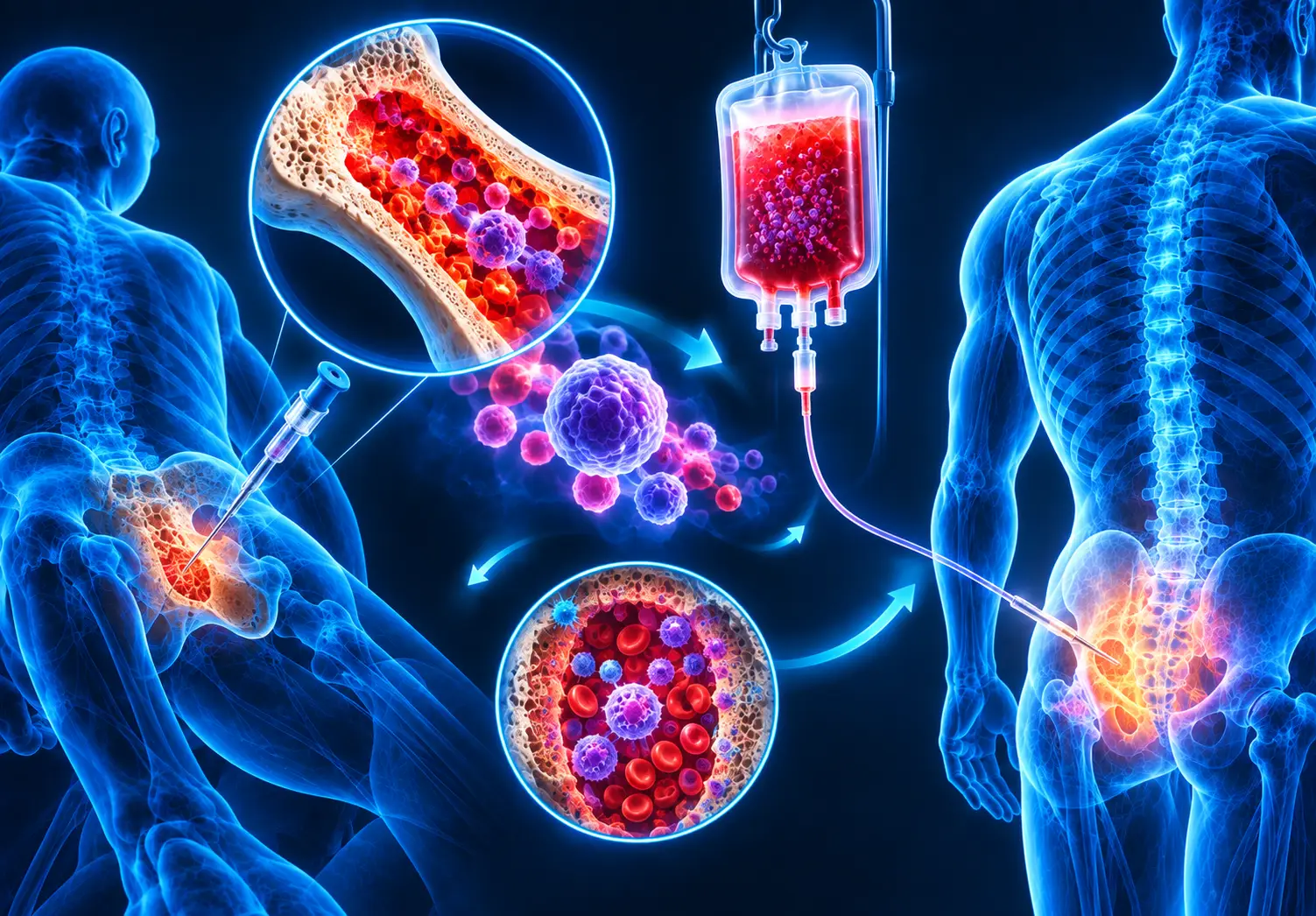
For some patients with serious blood diseases, a bone marrow transplant can offer a chance to replace unhealthy blood-forming cells with healthy ones. But is transplantation necessary in every case? And what does the journey actually involve?
Patients and families usually want clear answers:
Who needs a bone marrow transplant? Is it painful? Where do the stem cells come from? Is there a suitable donor? What are the risks? How long is recovery?
Let’s answer the most important questions.
What Is a Bone Marrow Transplant?
A bone marrow transplant, more accurately called a hematopoietic stem cell transplant (HSCT), replaces damaged or diseased blood-forming stem cells with healthy stem cells.
The cells may come from:
The transplant may be used to treat certain blood cancers and serious blood or immune-system disorders, depending on the patient’s diagnosis and overall condition.
Not every patient with a blood disorder needs a transplant.
It may be recommended for selected patients with conditions such as certain leukemias, lymphomas, multiple myeloma, myelodysplastic syndromes, aplastic anemia, and some inherited blood or immune disorders.
The decision depends on the exact diagnosis, disease status, previous treatment, overall health, and availability of an appropriate treatment strategy.
No.
Chemotherapy may be used before transplantation to destroy diseased cells and prepare the body to receive the new stem cells.
The transplant itself involves infusing stem cells through a vein, similar to a blood transfusion. The transplanted cells then travel to the bone marrow and begin producing new blood cells.
No.
A donor may be a brother or sister, another relative, or an unrelated donor who is medically and immunologically compatible.
In some situations, other donor options may also be considered when a fully matched donor is unavailable.
A fully matched donor is not always available.
Depending on the patient's disease and transplant center, doctors may consider alternative donor strategies, including haploidentical transplantation, in which a partially matched family donor may be used.
The appropriate option depends on the patient's medical circumstances and the transplant center's expertise.
The stem cells are usually infused through an intravenous line, rather than being surgically implanted into the bones.
However, the treatment surrounding transplantation can be physically demanding. The conditioning therapy given before the transplant may cause side effects such as fatigue, nausea, mouth sores, hair loss and a temporary severe reduction in blood-cell counts.
Bone marrow transplantation is a complex treatment and can have serious complications.
Depending on the type of transplant, possible complications include infection, bleeding, organ complications, graft-versus-host disease (GVHD), infertility, and disease relapse.
The risk is different for every patient and depends on factors such as age, diagnosis, disease status, donor compatibility and overall health.
Graft-versus-host disease (GVHD) is a complication that can occur after an allogeneic transplant.
In GVHD, immune cells from the donor attack tissues in the recipient's body.
It can affect different organs, particularly the skin, liver and gastrointestinal tract, and may be acute or chronic.
The transplant team uses medications and careful monitoring to reduce and manage this risk.
Recovery is not the same for everyone.
The new stem cells need time to establish themselves and produce healthy blood cells. Patients may need close monitoring and protection from infection during this period.
Even after leaving the hospital, recovery of the immune system can take considerably longer, particularly after an allogeneic transplant.
Yes.
Stem cell transplantation is an established treatment option for selected children with serious blood, immune-system and inherited disorders.
Children require specialized assessment because their age, growth, development and long-term health need to be considered when planning treatment.
Potentially, yes, depending on the diagnosis, transplant indication, medical eligibility and applicable requirements.
For international patients, a pre-travel medical review can be extremely valuable.
The transplant team may need:
The transplant team can then determine which additional investigations are required before treatment.
A transplant is not simply a procedure that is scheduled.
Before transplantation, the medical team performs a detailed evaluation to determine:
Is transplantation appropriate?
Which type of transplant is best?
What conditioning treatment is required?
Is there a suitable donor?
What are the expected risks?
And how should the patient be monitored afterward?
This careful preparation is one of the most important parts of the entire transplant journey.
Don't make your travel plans before your medical file has been reviewed.
Send your available medical reports, pathology and bone marrow results, previous treatment records and recent investigations for an initial assessment.
This allows the transplant team to understand the case and determine the appropriate next steps before international travel and treatment arrangements are made.
The right transplant starts with the right evaluation.
Share your medical reports and treatment needs with our team. We’ll help you explore suitable hospitals, specialists, treatment options, and estimated costs before you travel.
+2011 10078666
+2011 10078666
info@shencure.com