

Explore specialized neurosurgical care in Egypt, including brain tumor diagnosis and treatment, neurovascular surgery, advanced imaging, and individualized treatment planning
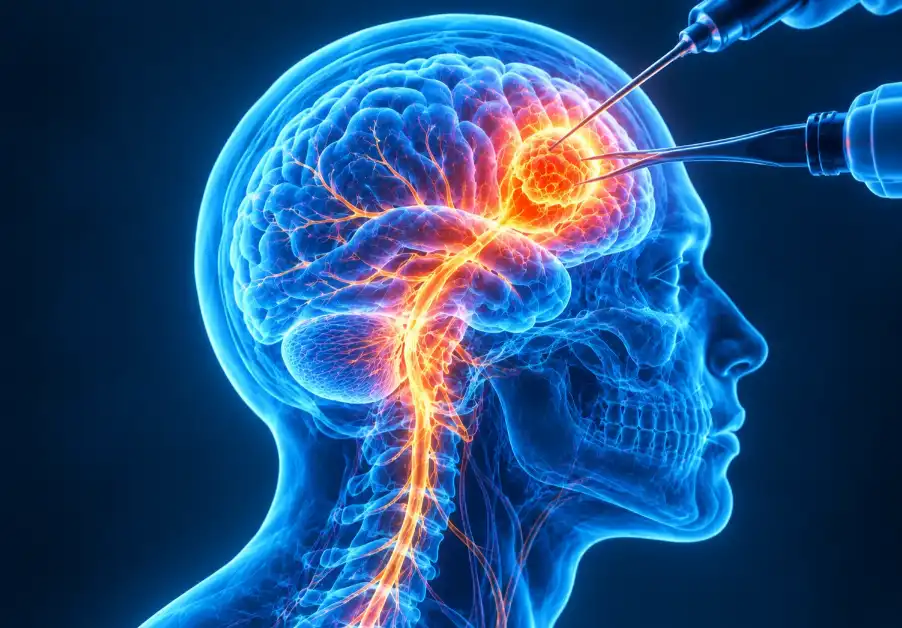
A brain tumor is an abnormal growth of cells in or around the brain. Brain tumors can be benign or malignant, and their effect depends on their type, size, location, and growth pattern.
Modern brain tumor treatment is highly individualized. Depending on the diagnosis, treatment may include surgery, radiation therapy, chemotherapy, targeted treatment, active monitoring, or a combination of approaches.
The first step is an accurate diagnosis and a detailed evaluation of the patient’s brain imaging and neurological condition.
Symptoms vary depending on the tumor's location and size. Possible symptoms include persistent or worsening headaches, seizures, vision problems, weakness or numbness, balance difficulties, changes in speech, memory problems, or changes in behavior and personality.
Having these symptoms does not necessarily mean that a person has a brain tumor. Medical evaluation and appropriate imaging are needed to determine the cause.
No. Brain tumors can be benign or malignant. However, even a benign tumor can cause serious problems if it grows in an important area of the brain or puts pressure on surrounding structures.
No. Some tumors may be monitored with regular MRI scans, while others may require surgery, radiation therapy, medication, or a combination of treatments.
The decision depends on the tumor type, size, location, growth, symptoms, and overall health of the patient.
Surgery may be recommended to:
The goal is not simply to remove a tumor, but to achieve the best possible balance between tumor control and preservation of neurological function.
A craniotomy is a surgical procedure in which a temporary section of the skull is opened to allow the neurosurgeon to access the brain.
It is commonly used for selected brain tumor operations and other intracranial procedures.
Brain surgery involves important and delicate structures, so potential risks exist. These vary depending on the tumor's location, size, type, and the procedure performed.
Possible complications may include bleeding, infection, seizures, neurological deficits, or other procedure-specific complications.
Your neurosurgical team should explain the individual risks and expected benefits before surgery.
Modern neurosurgery may use technologies such as:
These technologies can help the surgical team plan and perform complex procedures with greater precision.
Sometimes, but not every tumor can or should be completely removed.
If a tumor is located close to areas responsible for speech, movement, vision, memory, or other important neurological functions, the surgeon may prioritize preserving these functions while removing as much tumor as safely possible.
Recovery depends on the type and complexity of surgery, the tumor location, the patient's general health, and whether neurological symptoms were present before surgery.
Some patients may recover relatively quickly, while others require several weeks or months of rehabilitation and follow-up.
Yes. The possibility of recurrence depends on the type and grade of the tumor, how much could safely be removed, and the tumor's biological characteristics.
Regular follow-up and MRI scans may be required after treatment.
For a major brain operation, a second neurosurgical opinion can be very valuable.
It can help you understand:
For international patients, MRI or CT images, medical reports, pathology results, previous treatment records, and medication information can be reviewed before travel when available.
This may help the medical team understand the case and determine the appropriate next step.
You do not have to make a treatment decision without understanding your options.
Medical Disclaimer: This content is intended for general educational purposes and does not replace a personal medical examination, diagnosis, or treatment recommendation from a qualified neurosurgeon.
Neurovascular surgery is a specialized field of neurosurgery focused on diagnosing and treating disorders affecting the blood vessels of the brain and spinal cord.
These conditions can sometimes lead to serious complications such as brain hemorrhage, stroke, seizures, neurological weakness, or loss of consciousness. Early diagnosis and treatment can be critical, particularly when a blood vessel has ruptured or is at risk of rupture.
Modern neurovascular care combines advanced brain imaging, microsurgical techniques, endovascular procedures, and multidisciplinary neurological care to determine the safest treatment for each patient.
What Conditions Does Neurovascular Surgery Treat?
Neurovascular specialists may treat conditions including:
The appropriate treatment depends on the patient’s diagnosis, symptoms, vascular anatomy, and overall medical condition.
Neurovascular surgery involves the diagnosis and treatment of disorders affecting the blood vessels supplying the brain and spinal cord. Treatment may involve open microsurgery, endovascular procedures, or a combination of approaches.
A brain aneurysm is a weakened area in the wall of a blood vessel that can form a balloon-like bulge.
Some aneurysms may never cause symptoms, while others can rupture and cause a potentially life-threatening subarachnoid hemorrhage.
No. Treatment depends on factors such as the aneurysm's size, location, shape, growth, symptoms, previous rupture, and the patient's overall risk.
Some aneurysms may be monitored, while others may require preventive treatment.
Depending on the individual case, treatment may include:
The safest option depends on the specific vascular anatomy and clinical circumstances.
A cerebral AVM is an abnormal connection between arteries and veins in the brain.
Some AVMs may cause no symptoms, while others can present with brain hemorrhage, seizures, headaches, or neurological problems.
Treatment may involve microsurgical removal, endovascular embolization, stereotactic radiosurgery, or a combination of treatments.
A sudden, extremely severe headache—particularly a headache that reaches maximum intensity rapidly—can be a warning sign of bleeding around the brain.
Other possible symptoms include:
These symptoms require emergency medical assessment.
Clipping is an open microsurgical procedure in which a clip is placed across an aneurysm to prevent blood from entering it.
Endovascular treatment reaches the blood vessel from inside the circulation using a catheter, which may allow treatment with techniques such as coiling or flow diversion.
The appropriate approach depends on the aneurysm and the patient's individual anatomy.
Neurovascular procedures involve the brain and its blood supply, so they can carry significant risks.
Potential complications depend on the specific condition and procedure and may include bleeding, stroke, infection, seizures, neurological deficits, or other complications.
A specialist should explain the individual benefits and risks before treatment.
Depending on the suspected condition, doctors may use:
These investigations help define the brain's vascular anatomy and guide treatment planning.
Yes. Selected aneurysms can be treated using endovascular procedures, which access the affected blood vessel through a catheter rather than opening the skull.
However, endovascular treatment is not appropriate for every aneurysm.
Sometimes. Depending on the condition and risk level, management may include observation, medical treatment, regular imaging, or preventive intervention.
The decision should be individualized after specialist evaluation.
For international patients, available MRI, CT, CTA, MRA, angiography images, medical reports, and previous treatment records may be reviewed before travel.
This can help the specialist understand the case and determine the appropriate next step.
Seek emergency medical attention for symptoms such as:
Sudden severe headache, sudden weakness or numbness, difficulty speaking, sudden vision loss, seizures, loss of consciousness, or sudden severe neurological deterioration.
These symptoms can have several possible causes, including stroke or intracranial bleeding, and should not be ignored.
Medical Disclaimer: This article is for general educational purposes only and does not replace an in-person medical examination, diagnosis, or individualized treatment recommendation.
Neurosurgery is a highly specialized medical field dedicated to the diagnosis and surgical treatment of conditions affecting the brain, spine, spinal cord, and peripheral nerves.
Modern neurosurgery combines advanced imaging, microsurgical techniques, minimally invasive procedures, surgical navigation, and specialized postoperative care to provide patients with precise, individualized treatment.
Not every neurological condition requires surgery. The first step is always an accurate diagnosis and a careful assessment of whether surgery is truly necessary.
What Can Neurosurgery Treat?
Neurosurgical treatment may be considered for conditions such as:
The appropriate treatment depends on the patient’s symptoms, neurological examination, imaging, medical history, and overall health.
A neurosurgeon treats surgical conditions affecting the brain, spine, spinal cord, and peripheral nerves. Treatment may range from minimally invasive procedures to complex brain or spinal surgery, depending on the patient's condition.
No. Many patients improve with medication, physiotherapy, rehabilitation, and other non-surgical treatments. Surgery may be recommended when significant nerve compression, persistent severe symptoms, progressive weakness, or other specific medical indications are present.
Brain surgery may be considered for conditions such as certain brain tumors, intracranial bleeding, hydrocephalus, vascular abnormalities, or other structural problems. The decision depends on the exact diagnosis, location, severity, symptoms, and available treatment alternatives.
Persistent or progressive neurological symptoms such as muscle weakness, numbness, difficulty walking, loss of coordination, severe radiating pain, seizures, or significant abnormalities on MRI or CT may require specialist assessment.
Sudden weakness, loss of consciousness, difficulty speaking, a sudden severe headache, or a new seizure requires urgent medical evaluation.
Minimally invasive neurosurgery uses specialized instruments, microscopes, endoscopes, or image-guided technology to reach the affected area while limiting unnecessary tissue disruption.
It may offer advantages for appropriately selected patients, but it is not suitable for every condition.
Recovery varies according to the type of surgery, the underlying condition, the patient's general health, and whether neurological problems existed before surgery. Some patients recover within weeks, while complex procedures may require several months and rehabilitation.
For major or complex surgery, obtaining a second specialist opinion can be valuable. It may help clarify whether surgery is necessary, which procedure is appropriate, and what alternatives and potential risks should be considered.
Yes. For international patients, MRI/CT images, medical reports, previous treatment records, and relevant investigations can often be reviewed in advance to determine whether a detailed consultation or further assessment is appropriate.
There is no single procedure that is right for every patient. The correct treatment depends on the diagnosis, symptoms, neurological examination, imaging findings, and individual circumstances.
The goal is not simply to perform surgery, but to choose the safest and most appropriate treatment for the patient.
There is no single procedure that is right for every patient. The correct treatment depends on the diagnosis, symptoms, neurological examination, imaging findings, and individual circumstances.
The goal is not simply to perform surgery, but to choose the safest and most appropriate treatment for the patient.
Medical Disclaimer: This content is for educational purposes only and does not replace a personal examination or medical advice from a qualified physician.

+2011 10078666
+2011 10078666
info@shencure.com