

Explore spine surgery options in Egypt with specialized medical evaluation, treatment coordination, leading hospitals, and international patient support through ShenCure.
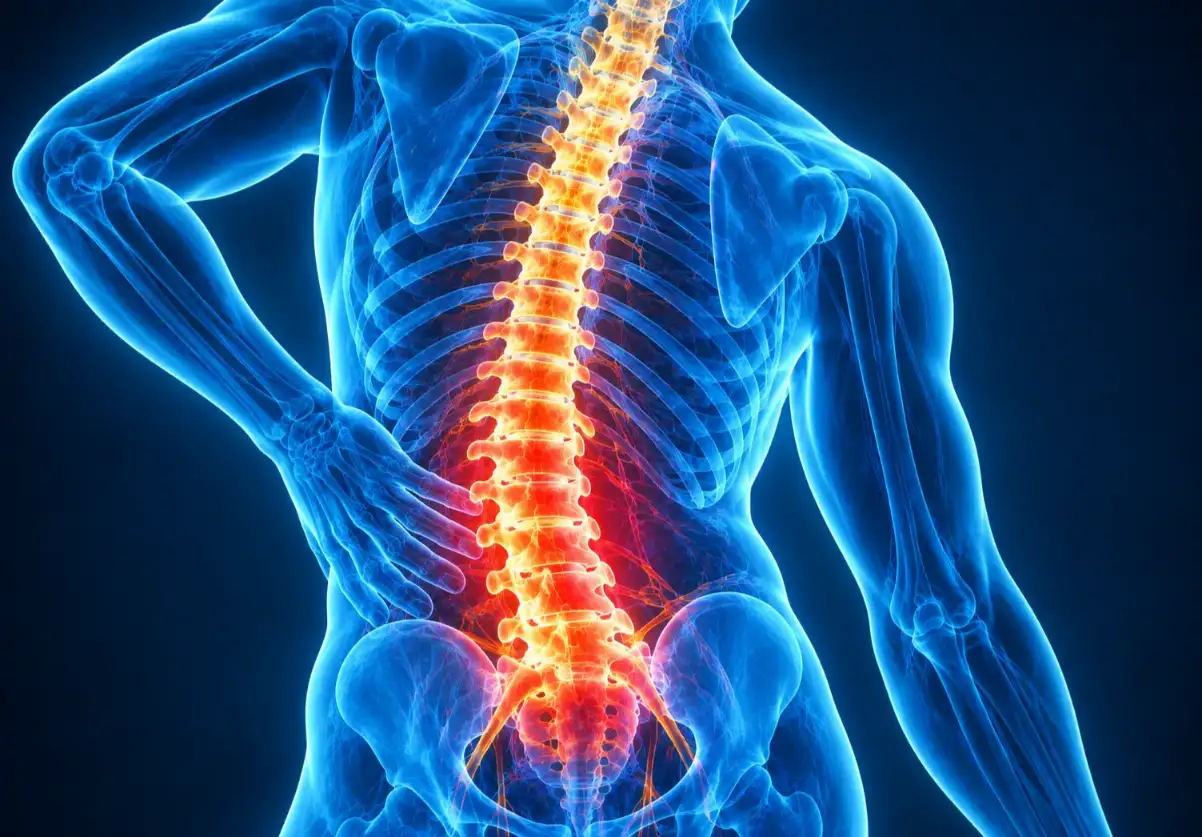
Back and neck pain can range from a temporary discomfort to a condition that affects walking, movement, sleep, work, and quality of life. The good news is that spine surgery is not always the first treatment option. The right approach depends on the cause of the problem, the severity of symptoms, neurological findings, and imaging results.
Modern spine care combines non-surgical treatments, minimally invasive procedures, advanced decompression techniques, and spinal fusion surgery when clinically appropriate.
Spine surgery may be considered for several conditions, including:
These conditions can affect the cervical, thoracic, or lumbar spine and may cause back or neck pain, numbness, weakness, or pain extending into the arms or legs.
No.
Many spinal conditions can initially be managed without surgery. Depending on the diagnosis, treatment may include medication, physical therapy, activity modification, rehabilitation, and selected spinal injections.
For example, conservative treatment is commonly used for lumbar spinal stenosis, while surgery may be considered when pain, weakness, or walking limitations significantly affect quality of life.
The important question is therefore not simply:
“Do I have a spine problem?”
It is:
“What is causing my symptoms, and what treatment is appropriate for my specific condition?”
Spine surgery is generally considered when there is a clear structural problem that matches the patient's symptoms and when non-surgical treatment has not provided adequate improvement.
Surgery may also become more urgent when there is significant or progressive neurological impairment.
A proper spine evaluation usually combines the patient's symptoms and neurological examination with appropriate imaging such as MRI, CT scans, or X-rays.
The goal is to relieve pressure on the spinal cord or nerves.
Procedures may include:
Decompression may be performed through traditional or minimally invasive approaches depending on the patient's condition.
Spinal fusion is used to stabilize one or more spinal segments by allowing vertebrae to heal together.
It may be considered in conditions such as spinal instability, spondylolisthesis, certain deformities, fractures, and selected degenerative conditions.
Common lumbar fusion techniques include procedures such as TLIF and PLIF, while cervical surgery may involve procedures such as ACDF. Recent American Spine Registry data show that TLIF/PLIF represents a substantial proportion of lumbar procedures, while ACDF is a major cervical procedure.
Modern minimally invasive spine surgery uses smaller incisions and techniques designed to reduce muscle disruption.
Depending on the diagnosis, minimally invasive approaches can be used for procedures such as lumbar decompression and spinal fusion.
However, minimally invasive does not automatically mean better for every patient. The surgical approach should be selected according to the diagnosis, anatomy, spinal stability, and surgeon's assessment.
A comprehensive evaluation may include:
Medical history → Neurological examination → MRI/CT/X-rays → Diagnosis → Non-surgical treatment when appropriate → Surgical planning if needed
The goal is to identify the actual source of symptoms and choose the least invasive treatment that can safely address the underlying problem.
Spinal surgery requires careful decision-making because the spine contains important nerves and the spinal cord.
A qualified spine specialist should evaluate:
The objective should never be “surgery at any cost.”
The objective is:
The right diagnosis. The right procedure. The right patient.
If you are experiencing persistent back or neck pain, numbness, weakness, sciatica, difficulty walking, or symptoms that are affecting your daily life, a specialized spine evaluation can help determine whether you need conservative treatment, an injection, minimally invasive surgery, decompression, fusion, or another treatment approach.
Back and neck pain can range from a temporary discomfort to a condition that affects walking, movement, sleep, work, and quality of life. The good news is that spine surgery is not always the first treatment option. The right approach depends on the cause of the problem, the severity of symptoms, neurological findings, and imaging results.
Modern spine care combines non-surgical treatments, minimally invasive procedures, advanced decompression techniques, and spinal fusion surgery when clinically appropriate.
Mild scoliosis may cause few or no symptoms. However, larger or progressive curves can lead to:
Severe untreated curves can sometimes affect the space available for the lungs and, rarely, cause neurological complications.
Yes, in some patients.
The risk of progression depends on factors such as the size and location of the curve, age, skeletal maturity, and the underlying cause.
Progression is particularly important in children and adolescents who are still growing. Larger curves are more likely to progress, which is why regular specialist assessment can be important.
No.
Many patients with scoliosis can be managed with observation, exercise and rehabilitation, pain management, or bracing when appropriate.
For growing children with certain curves, a brace may be used primarily to prevent the curve from progressing. It is not generally expected to completely straighten an established curve.
Surgery may be considered when the curve is severe or progressing, when significant pain or neurological problems are present, or when the deformity substantially affects function or quality of life.
For adolescents, spinal fusion is commonly considered for severe curves, often around 45–50 degrees or greater, depending on the individual case.
Modern Scoliosis Surgery
When surgery is necessary, the goal is not simply to “straighten the back.”
The surgical plan aims to:
Correct the deformity → Restore spinal balance → Protect neurological function → Stabilize the spine → Improve function and quality of life
Depending on the patient's condition, surgery may involve spinal fusion, corrective instrumentation, decompression of compressed nerves, or specialized techniques for selected growing children.
Complex scoliosis surgery requires detailed imaging, careful preoperative planning, assessment of spinal flexibility, and appropriate neurological monitoring.
Not every untreated curve becomes dangerous. Many mild curves remain stable and allow patients to live completely normal lives.
However, large or progressive curves should not be ignored. In adults, scoliosis can be associated with increasing back pain, spinal degeneration, nerve compression, and functional limitations. Severe deformity can also affect pulmonary function.
The key is to determine whether the curve is stable, progressive, symptomatic, or associated with nerve compression.
The most important question is not:
“How crooked is my spine?”
It is:
“Is my scoliosis progressing, and what is the safest treatment for my specific spine?”
A specialized spine evaluation can answer that question.
If you are experiencing persistent back or neck pain, numbness, weakness, sciatica, difficulty walking, or symptoms that are affecting your daily life, a specialized spine evaluation can help determine whether you need conservative treatment, an injection, minimally invasive surgery, decompression, fusion, or another treatment approach.

+2011 10078666
+2011 10078666
info@shencure.com