

Explore gastrointestinal surgery in Egypt, including laparoscopic and open surgical approaches for a range of digestive conditions, with specialist assessment and coordinated care for international patients.
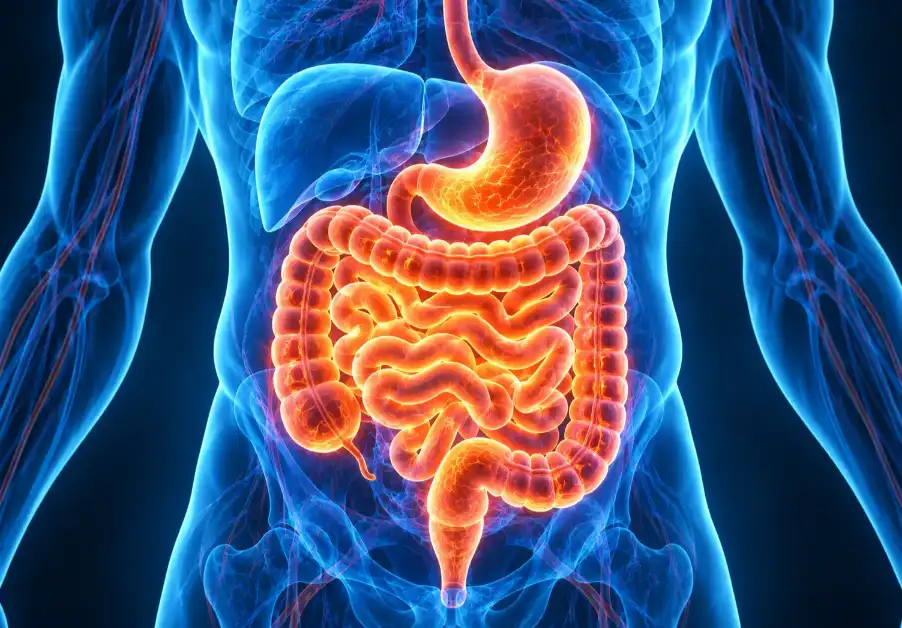
Digestive problems do not always require surgery. But when an operation is necessary, choosing the right procedure—and the right surgical team—can make a major difference.
Gastrointestinal surgery covers many conditions affecting the oesophagus, stomach, small intestine, colon, rectum, and related digestive organs. Treatment may range from minimally invasive procedures to complex major surgery, depending on the diagnosis.
The questions most patients want answered are simple:
Do I really need surgery?
Can my operation be done without a large incision?
Is laparoscopic or robotic surgery an option?
How risky is the procedure?
How long will recovery take?
Let’s look at the answers that matter most.
What Is Gastrointestinal Surgery?
Gastrointestinal (GI) surgery refers to surgical procedures used to diagnose or treat diseases affecting the digestive system.
Depending on the condition, surgery may involve the stomach, oesophagus, small bowel, colon, rectum, or other structures within the digestive tract.
Some procedures are performed through small incisions using laparoscopic techniques, while others require traditional open surgery. The best approach depends on the disease, its location, complexity, and the patient’s overall condition.
“Can my gastrointestinal surgery be done through small incisions—or do I need open surgery?”
This is one of the most common questions patients ask before gastrointestinal surgery.
The good news is that many gastrointestinal procedures can now be performed using minimally invasive techniques, including laparoscopic and, in selected cases, robotic surgery.
But there is an important point:
The smallest incision is not always the right operation.
The safest and most effective surgical approach depends on your diagnosis, the type and complexity of the operation, your previous surgeries, your general health, and the surgeon’s experience.
What Is Laparoscopic Surgery?
Laparoscopic surgery is commonly called keyhole surgery.
Instead of making one large abdominal incision, the surgeon uses several small incisions to insert a camera and specialized instruments. The inside of the abdomen is viewed on a monitor while the operation is performed.
For selected gastrointestinal operations, this minimally invasive approach can provide important recovery benefits.
What Is Open Gastrointestinal Surgery?
In open surgery, the surgeon makes a larger abdominal incision to directly access the organs and perform the operation.
Although it may involve a larger incision, open surgery remains an important and sometimes essential approach for complex or difficult cases.
It has not been replaced by laparoscopic surgery—and it should not be considered an inferior operation when it is the safest way to treat a particular patient.
Which Is Better: Laparoscopic or Open Surgery?
For many suitable patients, laparoscopic surgery offers important short-term advantages.
These may include:
Less postoperative pain
Smaller surgical wounds
Less need for pain medication
Shorter hospital stay
Faster return to normal activities
Less visible scarring
These advantages have been demonstrated across a range of minimally invasive gastrointestinal procedures.
However, this does not mean that laparoscopic surgery is always superior.
For some patients, open surgery may provide safer or more appropriate access, particularly when the disease is extensive or the anatomy is challenging.
No.
Many digestive conditions can be treated with medication, dietary changes, endoscopy, or other non-surgical approaches.
Surgery is usually considered when it is medically necessary—for example, when a condition causes significant symptoms, complications, obstruction, bleeding, cancer, or does not respond adequately to other treatments.
The decision should be based on your diagnosis, investigations, symptoms, and overall health.
GI surgery may be used for a wide range of conditions, including selected cases of:
Gastrointestinal cancers, bowel obstruction, complicated diverticular disease, inflammatory or structural bowel problems, gallbladder disease, reflux-related conditions, stomach disorders, and other surgical diseases of the digestive tract.
The exact operation depends on the condition and where it is located.
Often, yes.
Laparoscopic—or keyhole—surgery uses small incisions rather than one large abdominal incision.
For selected patients and procedures, robotic-assisted surgery may also be an option. However, minimally invasive surgery is not appropriate for every patient or every condition.
Not necessarily.
Minimally invasive surgery can offer advantages in appropriate cases, but the safest and most effective approach depends on the specific disease and the complexity of the operation.
For some patients, open surgery remains the most appropriate choice.
Depending on the patient's diagnosis, procedures may include:
Gastrectomy — removal of part or all of the stomach.
Colectomy — removal of part of the colon.
Rectal surgery — treatment of selected diseases affecting the rectum.
Oesophageal surgery — procedures involving the oesophagus.
Small bowel surgery — removal or repair of diseased sections.
Gallbladder and related upper-GI procedures may also be performed within gastrointestinal surgical services.
The exact operation is determined after proper diagnosis and assessment.
Like any major operation, GI surgery has potential risks.
Depending on the procedure, complications can include bleeding, infection, blood clots, problems related to anaesthesia, leakage from a surgical connection, bowel complications, or problems affecting other organs.
The level of risk varies significantly from one patient to another.
Your surgeon should explain the specific risks, expected benefits, alternatives, and recovery plan before you make a decision.
There is no single recovery time for gastrointestinal surgery.
A relatively straightforward minimally invasive procedure may have a very different recovery pathway from complex bowel, stomach, or oesophageal surgery.
Enhanced recovery programs are increasingly used to help suitable patients recover sooner through optimized preparation, pain control, nutrition, movement, and coordinated postoperative care.
Sometimes.
The dietary changes depend on the operation.
For example, patients undergoing gastrectomy may need smaller, more frequent meals because the stomach has been partially or completely removed.
Your surgical and nutrition team should provide individualized dietary advice.
Sometimes.
Symptoms alone are not enough.
Your surgeon may need to review your:
Medical history + physical examination + blood tests + endoscopy + CT/MRI or other imaging + pathology results when relevant.
The objective is to understand exactly what is causing the problem and whether surgery offers a meaningful benefit.
The dietary changes depend on the operation.
For example, patients undergoing gastrectomy may need smaller, more frequent meals because the stomach has been partially or completely removed.
Your surgical and nutrition team should provide individualized dietary advice.
Yes, international patients can be evaluated for gastrointestinal surgery in Egypt, depending on their medical condition and the procedure required.
For international patients, reviewing the medical file before traveling can make the process more efficient.
The surgical team may need:
After reviewing the available information, the team can determine whether further investigations are needed and whether surgery may be appropriate.
Don't start with the question, "How much is the surgery?"
Start with the more important question:
"Do I actually need surgery—and which operation is right for my condition?"
A proper surgical assessment should explain:
Your diagnosis
Your treatment options
Whether surgery is necessary
Which surgical approach may be suitable
The expected risks and benefits
And what recovery may look like
Considering Gastrointestinal Surgery in Egypt?
Send your medical reports, imaging, endoscopy and pathology results for an initial medical review.
Understanding the diagnosis and possible treatment plan before traveling can help you make a more informed decision about your care.
The right operation starts with the right diagnosis.
Sometimes, but not always.
Your preference is important and should be part of the discussion with your surgeon. However, the final decision also depends on whether the procedure can be performed safely through small incisions.
Your surgeon will consider the disease, anatomy, previous operations, overall health and complexity of the case before recommending the approach.
Not automatically.
Laparoscopic surgery can reduce some recovery-related problems, but it is still major surgery and carries risks such as bleeding, infection, injury to surrounding organs and complications related to anesthesia.
The most important question is not:
“Which surgery has smaller scars?”
It is:
“Which approach gives me the safest and most effective treatment?”
It may be an option for many planned gastrointestinal procedures, including selected operations involving the colon, rectum, stomach, oesophagus and other abdominal organs.
But suitability is determined individually.
Even patients having the same operation may not all be candidates for the same surgical approach.
Open surgery may be recommended when the operation is particularly complex, when the disease is extensive, when previous abdominal surgery has created significant adhesions, or when the surgeon believes open access will provide better control and safety.
The patient's general health and anatomy also matter.
The operation may be converted to open surgery.
This can happen when the surgeon cannot safely see or access the organs, encounters significant bleeding, dense scar tissue, or another unexpected problem.
Importantly, conversion does not necessarily mean something went wrong. In many circumstances, changing to an open approach is simply the safest surgical decision.
For several gastrointestinal procedures, minimally invasive and open surgery can achieve similar long-term treatment outcomes, while the main advantages of minimally invasive surgery are often seen during the early recovery period.
The answer, however, depends on the specific disease and operation.
Not necessarily.
Robotic surgery is another form of minimally invasive surgery. It may offer technical advantages in selected procedures, but it is not automatically better for every patient.
The choice should be based on the operation required, the patient's anatomy, and the surgeon's expertise and available technology.
So, Who Gets to Choose?
This is where many patients become confused.
You should have a choice—but the choice should be an informed medical decision.
Your surgeon should explain:
Why surgery is needed
Which approaches are possible
Why one approach may be preferable in your case
The expected benefits and risks
The possibility of converting to open surgery
What recovery is likely to involve
Then you and your surgical team can make the decision together. Shared decision-making is specifically recommended when selecting the operative approach.
For international patients, it is often useful to have the medical file reviewed before traveling.
Depending on the condition, the surgical team may need:
CT or MRI scans
Endoscopy reports and images
Biopsy/pathology results
Blood tests
Previous operation reports
Current medications
A detailed medical history
This allows the surgeon to determine whether minimally invasive or open surgery may be appropriate and whether additional investigations are required.
The Bottom Line
Laparoscopic surgery is not simply “better” than open surgery.
For the right patient and the right operation, it may mean less pain, smaller incisions and a faster recovery.
But when open surgery provides safer or more effective access, open surgery may be the better choice.
The best surgery is not necessarily the one with the smallest scar.
It is the operation that treats your disease effectively and safely.
Considering Gastrointestinal Surgery in Egypt?
Don't decide between laparoscopic and open surgery based on an internet article alone.
Send your medical reports, imaging, endoscopy and pathology results for an initial medical review.
After understanding your diagnosis and the complexity of your case, the surgical team can determine which approach may be appropriate and explain the expected treatment pathway before you make travel arrangements.
Right diagnosis. Right surgical approach. Right decision.

+2011 10078666
+2011 10078666
info@shencure.com