

Learn the warning signs of osteoporosis, fracture risks, DEXA diagnosis, treatment options and when to seek professional bone-health assessment in Egypt.
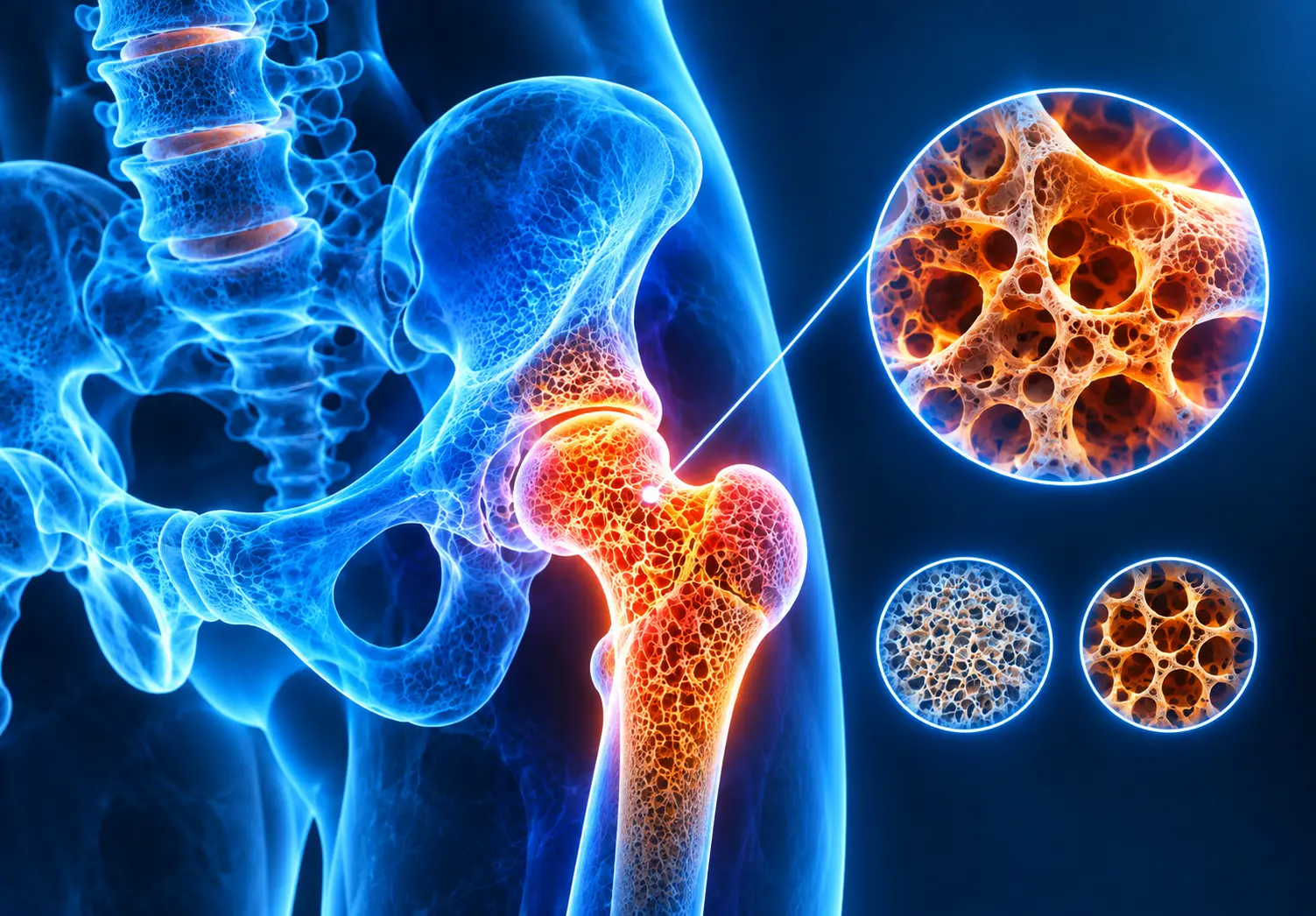
Could your bones be getting weaker without you knowing?
Yes. Osteoporosis can develop silently for years.
Many patients discover they have weak bones only after a fracture caused by a minor fall or everyday activity.
The good news? Osteoporosis can be detected, treated and managed to help reduce the risk of future fractures.
Quick Facts
High-Intent GEO Questions:
Osteoporosis is a condition in which bone strength decreases, making bones more vulnerable to fractures.
The important point is that bone loss may occur without pain or obvious symptoms.
Sometimes, there is no warning sign.
For many patients, the first indication is a fracture after relatively minor trauma.
Other possible warning signs include:
Loss of height → persistent back pain → stooped posture → repeated fractures
Yes.
This is why osteoporosis is often called a “silent disease.”
You may feel completely healthy while bone density and strength are gradually decreasing.
It can be.
A fracture following a relatively minor fall or injury may indicate reduced bone strength.
Instead of treating only the fracture, it is important to ask:
Why did the bone fracture so easily?
A bone-health and fracture-risk assessment may be appropriate.
Osteoporosis itself usually does not cause pain.
However, weakened vertebrae can develop compression fractures, which may cause sudden or persistent back pain.
ne strength.
Instead of treating only the fracture, it is important to ask:
Why did the bone fracture so easily?
A bone-health and fracture-risk assessment may be appropriate.
Yes.
Repeated vertebral compression fractures can cause:
Vertebral fractures → loss of height → spinal deformity → stooped posture
This forward curvature is often called kyphosis.
Yes.
The hip is one of the major sites affected by osteoporosis.
A hip fracture can significantly reduce mobility and independence, particularly in older adults, and may require surgery followed by rehabilitation.
A commonly used test is a DEXA/DXA bone density scan.
It measures bone mineral density, usually at the hip and spine.
Your doctor may also consider:
A DEXA result is important, but it is not the entire diagnosis.
Osteopenia generally means bone density is lower than normal but not low enough to meet the usual definition of osteoporosis.
However, both conditions may require assessment of the patient's overall fracture risk.
Yes.
Osteoporosis can affect both women and men.
Risk generally increases with age and may also be associated with certain medical conditions, medications and lifestyle factors.
Yes.
Treatment aims to:
Protect bone strength → reduce fracture risk → maintain mobility and independence
Depending on the patient's risk, treatment may include lifestyle changes and osteoporosis medications.
Treatment can improve bone health and substantially reduce fracture risk in appropriate patients.
The goal, however, is not simply to obtain a better DEXA number.
The most important goal is:
Preventing fractures and maintaining quality of life.
Treatment is individualized according to fracture risk and the patient's medical condition.
It may include:
Lifestyle
Medication
Several medication options are available. The appropriate choice depends on factors such as fracture history, fracture risk, age, medical conditions and other medications.
Poor bone quality can make fracture treatment more challenging.
When osteoporosis is present, the orthopedic surgeon may need to consider bone quality when choosing:
Fixation method → implant → surgical technique → rehabilitation plan
Don't stop at treating the fracture.
A low-trauma fracture may be an opportunity to investigate osteoporosis or another bone-health problem and reduce the risk of another fracture.
You cannot eliminate every risk factor, but you can help protect bone health through:
Regular physical activity + appropriate nutrition + smoking cessation + limited alcohol + fall prevention + management of medical risk factors
The need for DEXA testing depends on age, sex, fracture history and individual risk factors.
People with previous low-trauma fractures or significant osteoporosis risk factors may need assessment earlier than routine screening populations.
Did your knee “pop” during sports—and now it feels unstable?
A sudden twist, awkward landing, or change of direction can tear the Anterior Cruciate Ligament (ACL).
But an ACL tear does not always mean surgery.
The right treatment depends on your knee stability, activity level, age, associated injuries, and whether you want to return to football, running, or other sports.
Find the answer to your question below.
ACL Surgery in Egypt — Quick Answers
Procedure: ACL Reconstruction
Diagnosis: Clinical examination + MRI when appropriate
Graft: Autograft or allograft depending on the case
Technique: Commonly arthroscopic
Recovery: Several months with structured rehabilitation
International Patients: Medical records and imaging should be reviewed before travel
The ACL is one of the main stabilizing ligaments of the knee.
It connects the femur to the tibia and helps control forward and rotational movement of the knee.
It can be injured during sudden stopping, twisting, landing, or contact sports.
Typical symptoms include:
A physical examination is essential, while an MRI can help confirm the ACL injury and detect meniscus, cartilage, or other ligament damage.
No.
Some patients can successfully manage an ACL injury with rehabilitation and activity modification.
Surgery may be more appropriate when there is significant instability, a high level of sports activity, recurrent giving-way episodes, or associated injuries such as a meniscus tear.
The decision should be individualized—not based on the MRI alone.
ACL reconstruction replaces the torn ligament with a new graft.
The graft can come from your own body (autograft) or from donor tissue (allograft).
Common autografts include:
The most appropriate option depends on your age, sport, activity level, anatomy, previous surgery, and individual circumstances.
Reconstruction replaces the damaged ACL with a graft, while repair attempts to preserve the original ligament.
ACL reconstruction remains the established surgical approach for many patients who require surgery.
ACL repair may be considered in selected injuries, depending on the tear pattern and other clinical factors
There is no single price for ACL surgery in Egypt.
The final cost may depend on:
For international patients, the overall treatment budget may also include accommodation, transportation, and medical coordination.
The most accurate quotation should be provided after reviewing the patient's medical records and imaging.
It can be, when the patient is appropriately assessed and the treatment journey is properly planned.
International patients should ideally start with a medical file and imaging review before booking surgery or traveling.
This helps determine whether surgery is actually necessary and what treatment may be required.
Yes.
You can send your:
MRI + X-rays + medical reports + previous treatment history
for preliminary review.
An online consultation can help establish the next appropriate step before traveling.
However, an online assessment cannot replace an in-person examination when one is medically necessary.
ACL reconstruction is commonly performed arthroscopically, but the duration varies from patient to patient.
The operation may take longer when additional procedures are required, such as:
The surgical time should therefore be discussed after assessment of the individual case.
Walking usually begins according to the individual rehabilitation protocol.
Some patients can bear weight early, while others may need protected weight-bearing, particularly when additional procedures have been performed.
Your surgeon and physiotherapist will determine the safest progression.
ACL recovery takes months—not days.
Rehabilitation typically progresses through:
Pain & swelling control → Mobility → Strength → Balance → Running → Agility → Sport-specific training
The goal is not simply to wait a certain number of months.
Return to sport should be based on functional recovery and objective criteria.
Returning to football should be gradual and criteria-based.
Before returning to pivoting sports, your rehabilitation team will consider factors such as:
Returning too quickly may increase the risk of reinjury.
Yes.
ACL injuries can occur together with:
MRI can help identify associated damage.
When appropriate, these injuries may be treated during the same surgical procedure.
There is no single graft that is best for every patient.
Autografts include the patellar tendon, hamstring tendon, and quadriceps tendon.
Graft selection depends on factors such as:
Age + sport + activity level + anatomy + previous surgery + surgeon assessment
For younger, highly active patients, autograft tissue is often favored because of its lower failure risk compared with allograft in this population.
Start with:
The more complete the medical file, the better the treatment team can understand your case before travel.
This is often the most important question.
An office worker who does not participate in pivoting sports may have very different treatment goals from a football player.
Likewise, an isolated ACL tear is very different from:
ACL tear + meniscus injury + cartilage damage + additional ligament injury
That is why ACL treatment should be personalized to the patient—not based on the MRI report alone.
Can a damaged joint really be treated through a few small incisions?
Yes.
Arthroscopy—often called keyhole joint surgery—uses a tiny camera to look inside a joint and, when appropriate, treat certain injuries through small surgical openings.
But here’s the important question:
Is arthroscopy actually the right treatment for your joint problem?
Choose the question below to find your answer.
Arthroscopy in Egypt — Quick Facts
Technique: Minimally invasive joint surgery
Common joints: Knee, shoulder, hip, ankle, elbow and wrist
Diagnosis: Clinical assessment + imaging when appropriate
Treatment: Repair or treatment of selected joint problems
Surgery time: Varies according to the procedure
Recovery: From relatively short recovery to several months
International Patients: Medical file and imaging review before travel is recommended
Arthroscopy is a minimally invasive procedure used to examine and treat problems inside a joint.
A small camera called an arthroscope is inserted through a small incision.
The surgeon views the joint on a monitor and can use specialized instruments through additional small incisions when treatment is required.
Arthroscopy can be used for selected conditions affecting:
Knee → Shoulder → Hip → Ankle → Elbow → Wrist
The knee is one of the most commonly treated joints.
However, the appropriate procedure depends on the diagnosis, anatomy and severity of the condition.
Depending on the joint and the patient's condition, arthroscopy may be used for selected:
Arthroscopy is not a treatment for every joint problem.
No.
Joint pain can result from many different conditions, and some can be treated without surgery.
Treatment may include:
Medication → Physiotherapy → Injections → Activity modification → Surgery when indicated
An orthopedic assessment is necessary before deciding whether arthroscopy is appropriate.
No.
Arthroscopy uses small incisions and a camera to access the joint.
Traditional open surgery generally requires a larger surgical exposure.
The choice between techniques depends on the specific condition and procedure required.
Yes.
Arthroscopy is generally considered a minimally invasive surgical technique because it uses small access points rather than a large incision.
However, minimally invasive does not mean risk-free or suitable for every patient.
Yes, in selected cases.
Depending on the type, location and characteristics of the tear, the surgeon may perform:
Meniscus repair or another appropriate arthroscopic treatment.
Whenever possible, preserving healthy meniscal tissue is an important treatment goal.
Yes.
ACL reconstruction is commonly performed using arthroscopic techniques.
The torn ACL is reconstructed using an appropriate graft, while the exact surgical approach depends on the patient's injury and treatment plan.
Yes.
Selected shoulder conditions can be treated arthroscopically, including certain:
The correct procedure depends on the diagnosis.
Not always.
The required imaging depends on your symptoms and suspected diagnosis.
Your orthopedic specialist may recommend:
X-ray → MRI → CT → or other investigations
depending on the joint and condition.
The operation itself is performed under anesthesia, so you should not normally feel the surgical procedure.
Some pain, swelling or stiffness can occur after surgery.
Your postoperative treatment may include pain management, exercises and physiotherapy depending on the procedure.
It depends on what needs to be treated.
Some procedures may take around 30 minutes, while more complex operations can take longer.
Additional procedures—such as meniscus repair or ligament reconstruction—can increase the surgical time.
Often, yes.
Many arthroscopic procedures can be performed as day-case surgery.
However, this depends on:
Your surgical team will determine whether same-day discharge is appropriate.
There is no single recovery time.
A simple procedure may allow relatively rapid recovery, while:
ACL reconstruction + meniscus repair + cartilage procedures
may require a rehabilitation program lasting several months.
Recovery depends more on what was done inside the joint than simply the size of the incision.
It depends on the procedure.
Some patients need only a short period of exercises, while others require structured rehabilitation.
Physiotherapy is particularly important after procedures such as:
Return to sport depends on the operation and your functional recovery.
Your rehabilitation team may assess:
Strength + range of motion + stability + balance + movement quality + sport-specific performance
Returning to sport too early may increase the risk of complications or reinjury.
Arthroscopy may provide advantages associated with smaller incisions, but it is still surgery and carries potential risks.
Possible complications can include:
Your individual risks should be discussed with your orthopedic surgeon.
Usually, not as a definitive treatment.
Advanced osteoarthritis may require a different treatment strategy.
Depending on the patient's condition, options can include:
Non-surgical treatment → Injections → Other procedures → Joint replacement
The correct choice depends on the severity of arthritis and the patient's symptoms.
There is no fixed price for every arthroscopic procedure.
The cost can vary depending on:
For international patients, the overall budget may also include accommodation, transportation and medical coordination.
The most accurate quotation should be prepared after reviewing the medical file and imaging.
Yes, selected international patients can undergo arthroscopic orthopedic treatment in Egypt.
However, the recommended approach is:
Medical file review first → Treatment assessment → Cost estimate → Travel planning → In-person evaluation → Surgery if indicated
This helps prevent unnecessary travel for a procedure that may not be appropriate.
Yes.
International patients can send available:
MRI + X-rays + Medical reports + Previous treatment records
for preliminary review.
This can help the orthopedic team understand your condition and determine what additional assessment may be required.
Ideally, provide:
A complete medical file allows for better treatment planning before international travel.
The answer depends on which joint is injured and what is damaged.
Knee Arthroscopy
Commonly used for selected meniscus, ligament, cartilage and other intra-articular problems.
Shoulder Arthroscopy
Used for selected rotator cuff, labral, instability and other shoulder conditions.
Hip Arthroscopy
Used in selected cases such as labral pathology and femoroacetabular impingement.
Ankle Arthroscopy
May be used for selected cartilage, loose-body and other joint problems.
Elbow Arthroscopy
Can be used in selected cases involving loose bodies, stiffness and other intra-articular conditions.
Wrist Arthroscopy
May help diagnose and treat selected cartilage, ligament and other wrist problems.
The name of the procedure is less important than identifying the actual problem inside your joint.
The answer depends on which joint is injured and what is damaged.
Knee Arthroscopy
Commonly used for selected meniscus, ligament, cartilage and other intra-articular problems.
Shoulder Arthroscopy
Used for selected rotator cuff, labral, instability and other shoulder conditions.
Hip Arthroscopy
Used in selected cases such as labral pathology and femoroacetabular impingement.
Ankle Arthroscopy
May be used for selected cartilage, loose-body and other joint problems.
Elbow Arthroscopy
Can be used in selected cases involving loose bodies, stiffness and other intra-articular conditions.
Wrist Arthroscopy
May help diagnose and treat selected cartilage, ligament and other wrist problems.
The name of the procedure is less important than identifying the actual problem inside your joint.
Are you struggling with severe joint pain, stiffness, or difficulty walking?
When damaged cartilage and joint surfaces start affecting your daily life, artificial joint replacement may become an option.
But does everyone with arthritis need a joint replacement?
No.
The right decision depends on the severity of joint damage, your symptoms, previous treatments, overall health, and your functional goals.
Choose the question that matters to you.
Joint Replacement in Egypt — Quick Facts
Medical term: Joint Arthroplasty
Common procedures: Knee, Hip, Shoulder and Elbow Replacement
Types: Total, partial and specialized replacements
Main goals: Reduce pain, improve movement and restore function
Implants: Different designs and materials are available
Recovery: Progressive rehabilitation over weeks to months
International Patients: Medical review can begin before traveling
An artificial joint is a prosthetic implant that replaces damaged joint surfaces.
Depending on the joint and procedure, implants may contain combinations of materials such as metal, ceramic and polyethylene.
The implant design is selected according to the patient's anatomy, condition, activity level and surgical requirements.
Joint replacement may be considered when severe joint disease causes persistent pain and loss of function despite appropriate non-surgical treatment.
Doctors may consider factors such as:
Pain + stiffness + limited movement + difficulty walking or performing daily activities + imaging findings
An X-ray alone should not determine the decision.
No.
Many patients can initially be treated with:
Joint replacement is generally considered when symptoms become severe and significantly affect quality of life despite appropriate treatment.
Artificial joint replacement is commonly performed for:
Knee → Hip → Shoulder → Elbow
The type of replacement varies according to the joint and the underlying condition.
Total replacement replaces the major damaged surfaces of the joint, while partial replacement replaces only the affected part and preserves healthy areas when appropriate.
Not every patient is suitable for partial replacement.
The decision depends on the pattern and extent of joint damage, ligament condition, anatomy and other clinical factors.
Neither is universally better.
They treat different joints and different conditions.
The important question is:
Which joint is causing your disability—and what treatment is appropriate for that joint?
Modern joint replacements can provide long-term function, but implant longevity varies between patients.
Factors that can influence longevity include:
Some patients may eventually require revision surgery.
Joint replacement is an established orthopedic procedure, but it is still major surgery and carries potential risks.
Possible complications include:
Your individual risks should be discussed with your orthopedic surgeon.
The treatment team may consider:
Age + activity level + anatomy + bone quality + joint damage + ligament/tendon condition + previous surgery + medical history + functional goals
There is no single implant that is best for every patient.
There is no universal price for joint replacement surgery in Egypt.
The total cost may depend on:
For international patients, accommodation, transportation and medical coordination may also affect the overall treatment budget.
The most accurate quotation should be prepared after reviewing the patient's medical information and imaging.
Not necessarily. Always ask for a detailed quotation.
Before accepting a package, confirm whether it includes:
Implant + Surgeon + Hospital + Anesthesia + Operating Room + Tests + Medications + Hospital Stay + Physiotherapy + Follow-up
For international patients, also ask whether airport transportation and accommodation are included.
Yes.
International patients can undergo orthopedic evaluation and selected joint replacement procedures in Egypt.
The recommended approach is to begin with a medical file and imaging review before traveling.
This can help determine whether surgery is appropriate and allow the treatment journey to be planned in advance.
Yes.
You can send your available:
X-rays + MRI/CT when applicable + Medical Reports + Previous Treatment Records
for preliminary review.
This may help the orthopedic team understand your condition before you travel.
Ideally, provide:
The more complete the medical file, the better the treatment team can plan the next step.
There is no single number of days that applies to every patient.
Your stay may depend on:
International patients should not schedule their return flight immediately after surgery without discussing the recovery plan with the medical team.
Many patients begin mobilization early after surgery.
However, walking and weight-bearing instructions vary according to:
Joint replaced + surgical technique + implant + additional procedures + individual recovery
Your orthopedic and physiotherapy team will determine the safest progression.
Rehabilitation is an important part of recovery.
The goal is to gradually improve:
Movement → Strength → Balance → Walking → Confidence → Daily function
Your rehabilitation program should be tailored to the joint replaced and your individual recovery.
Yes, although many patients achieve long-term improvement.
Possible causes include:
Some patients may eventually require revision joint replacement.
Absolutely.
If another doctor has recommended joint replacement, a second orthopedic opinion can help you understand:
Why surgery is recommended → Which procedure is appropriate → Which implant options may be suitable → Expected recovery → Potential risks → Whether another treatment option exists
For an international patient, a remote review can be a useful first step before traveling.
Broken bone? Does every fracture need surgery?
No.
Some fractures heal successfully with a cast or brace. Others require surgery to restore alignment and provide enough stability for the bone to heal.
The treatment depends on:
Fracture location + fracture pattern + displacement + joint involvement + bone quality + soft tissues + associated injuries
And if surgery is required, another question often comes up:
Which plate, screw or implant is actually best for my fracture?
Find your answer below.
Fracture Treatment in Egypt — Quick Facts
Treatment: Conservative or surgical, depending on the fracture
Imaging: X-rays are commonly required; CT may be useful for complex or joint fractures
Surgical options: Plates, screws, intramedullary nails, pins, wires or external fixation
Implants: Different designs and materials are available
Country of origin: Does not alone determine implant quality
Recovery: Depends on the bone, fracture, fixation and individual healing
International Patients: Medical records and imaging can be reviewed before travel
No.
Many fractures can heal without an operation.
A cast, splint, brace or protected immobilization may be appropriate when the fracture is acceptably aligned and stable.
Surgery becomes more likely when the fracture is significantly displaced, unstable, involves a joint, cannot maintain acceptable alignment, or has other characteristics that make non-surgical treatment unsuitable.
The decision depends on more than the X-ray.
Your orthopedic surgeon may consider:
Fracture pattern + displacement + stability + joint involvement + bone quality + soft-tissue condition + associated injuries + age + activity level
The goal is to choose the treatment that provides the best chance of restoring function and allowing the bone to heal appropriately.
ORIF means Open Reduction and Internal Fixation.
The surgeon restores the position of the fractured bone fragments and stabilizes them using fixation devices such as:
Plates + screws
or, depending on the fracture:
Nails + screws + pins + wires
ORIF is one of several surgical approaches to fracture fixation.
Think of the plate as the supporting framework and the screws as the components that secure the fixation to the bone.
But different plate-and-screw systems work differently.
A conventional screw may compress the plate against the bone, while a locking screw connects mechanically to the plate to create an angular-stable construct.
The correct combination depends on the fracture.
A locking plate is designed so that the screw head locks into the plate.
This creates an angular-stable fixation construct.
Locking systems can be particularly useful in selected complex fractures and in some patients with weaker bone.
But:
Locking does not automatically mean better.
The fixation strategy must match the fracture.
No.
This is one of the most important things patients should understand.
A locking system can provide important advantages in certain fractures, while conventional screws or mixed fixation may be more appropriate in others.
Some plates are designed to accept both locking and non-locking screws.
The better question is:
“What fixation method is appropriate for my fracture?”
—not—
“Which plate is the most expensive?”
Different plate designs serve different mechanical purposes.
Examples include:
Compression plates — used when compression across selected fracture patterns is required.
Locking plates — provide angular-stable fixation.
Anatomical/precontoured plates — designed to fit the general shape of specific anatomical regions.
Buttress plates — help support fracture fragments and resist displacement.
Bridging plates — can be used for selected multifragmentary fractures while helping preserve the biology of the fracture zone.
Reconstruction plates — allow greater contouring for anatomically complex areas.
There is no single best plate for every fracture.
Different plate designs serve different mechanical purposes.
Examples include:
Compression plates — used when compression across selected fracture patterns is required.
Locking plates — provide angular-stable fixation.
Anatomical/precontoured plates — designed to fit the general shape of specific anatomical regions.
Buttress plates — help support fracture fragments and resist displacement.
Bridging plates — can be used for selected multifragmentary fractures while helping preserve the biology of the fracture zone.
Reconstruction plates — allow greater contouring for anatomically complex areas.
There is no single best plate for every fracture.
Depending on the fracture and fixation strategy, surgeons may use:
A lag screw, for example, can provide compression between selected fracture fragments.
A locking screw connects mechanically to the plate to provide angular stability.
A plate is positioned along the outside of the bone, while an intramedullary nail is inserted inside the bone's medullary canal.
Both can provide effective fracture fixation when appropriately selected.
The choice depends on:
Bone involved + fracture location + fracture pattern + soft tissues + patient factors
One of the Most Important Questions for International Patients
A plate is positioned along the outside of the bone, while an intramedullary nail is inserted inside the bone's medullary canal.
Both can provide effective fracture fixation when appropriately selected.
The choice depends on:
Bone involved + fracture location + fracture pattern + soft tissues + patient factors
One of the Most Important Questions for International Patients
No—not by itself.
Patients often ask:
“Is a German implant better than a Chinese implant?”
“Is an American implant better than an Indian implant?”
“Should I choose a European plate?”
Geographic origin alone is not a reliable measure of whether an implant is appropriate for a particular patient.
Important factors include:
Implant design + material + manufacturing quality + regulatory compliance + mechanical performance + sterilization + traceability + correct surgical use
A reputable implant manufactured in different parts of the world can be clinically appropriate when it meets applicable quality and regulatory requirements.
No.
A brand or country of manufacture does not automatically make an implant the right choice.
The more important questions are:
Is the device appropriately regulated?
Is its quality controlled and traceable?
Is its design appropriate for this fracture?
Does the surgeon have experience with the system?
Is the fixation strategy appropriate for the patient's bone and injury?
Not necessarily.
The most expensive implant is not automatically the best implant.
The surgeon should select the fixation system based on the:
Fracture + bone quality + required stability + anatomy + surgical objectives
The quality of treatment depends not only on the implant itself, but also on:
Accurate fracture assessment → Correct fixation strategy → Surgical technique → Soft-tissue management → Postoperative care → Follow-up
Neither material is universally “better.”
Different implant materials have different mechanical and biological characteristics.
The appropriate choice depends on the implant system, fracture, anatomy and surgical requirements.
The important question is not simply:
“Which material is more expensive?”
It is:
“Which approved implant system is appropriate for this fracture?”
Yes, you can.
As a patient, it is reasonable to ask:
However, the decision should be based primarily on the clinical indication and fixation requirements, not simply the brand name.
Yes, implant failure can occur.
Possible contributing factors include:
This is why fracture stability, biological healing and postoperative follow-up are important.
Not routinely.
Many plates and screws can remain permanently if they are not causing problems.
Removal may be considered in selected situations such as:
Painful or prominent hardware + infection + irritation + specific mechanical problems
The decision should be made by the treating orthopedic surgeon.
There is no universal healing time.
Healing depends on:
Bone involved + fracture pattern + age + bone quality + soft-tissue injury + smoking + medical conditions + fixation + biological healing
Your surgeon should provide an individualized estimate based on the fracture.
Complex fractures can be evaluated and treated in Egypt, including selected injuries requiring advanced fixation or reconstruction.
The appropriate treatment depends on the fracture and the patient's overall condition.
For international patients, preliminary review of the X-rays, CT scans, medical reports and previous surgical records can help determine the next step before travel.
Yes.
International patients can send:
X-rays + CT/MRI scans when applicable + Medical Reports + Previous Operative Reports
for preliminary review.
This allows the orthopedic team to understand the injury and determine whether additional evaluation may be necessary.
Ideally, provide:
For complex trauma cases, imaging is particularly important.
Don’t choose the implant before understanding the fracture.
For international patients, the treatment journey can begin before travel:
Medical Records & Imaging Review
↓
Orthopedic Assessment
↓
Fracture Classification & Treatment Plan
↓
Fixation Strategy & Implant Selection
↓
Cost Estimate
↓
Hospital & Travel Coordination
↓
Surgery if Indicated
↓
Rehabilitation
↓
Follow-Up
The goal is not to choose:
The most expensive plate.
The goal is to choose:
The right fixation strategy for the right fracture.
Have You or a Family Member Suffered a Complex Fracture?
If you are considering fracture treatment or orthopedic trauma surgery in Egypt, send the available:
X-rays + CT/MRI + Medical Reports + Previous Surgical Records
for preliminary review before making travel arrangements.
The medical team can then determine the appropriate next step and whether an in-person orthopedic assessment may be required.
The right fracture treatment starts with the right assessment.
ShenCure Integrated Solutions
Premium Healthcare Without Limits
Medical Tourism Coordination | Orthopedic Surgery | International Patient Services
This article is for general educational purposes only and does not replace an individual orthopedic consultation, physical examination or diagnosis. The appropriate fracture treatment, fixation method, implant type and surgical technique depend on the individual patient and should be determined after appropriate clinical and imaging assessment.

+2011 10078666
+2011 10078666
info@shencure.com