


Knee replacement surgery is one of the most common procedures used to treat severe knee joint damage when pain, stiffness, and reduced mobility significantly affect daily life.
For international patients considering knee replacement in Egypt, the decision involves more than comparing surgical prices. Patients should understand whether knee replacement is appropriate for their condition, what type of procedure may be recommended, where the surgery will take place, how long recovery may take, and what follow-up care will be required after returning home.
Egypt offers orthopedic services for international patients across major medical centers and hospitals, with treatment options ranging from conventional joint replacement to more specialized procedures depending on the patient’s condition and the surgeon’s assessment. The Egypt Healthcare Authority also lists orthopedics among the specialties available through its medical tourism services and reports international-patient programs across its healthcare network.
This guide explains knee replacement in Egypt, including the potential cost, types of surgery, preparation, recovery, hospital stay, rehabilitation, and what international patients should expect before and after treatment.
What Is Knee Replacement Surgery?
Knee replacement, also called knee arthroplasty, is a surgical procedure in which damaged portions of the knee joint are removed and replaced with artificial components.
The goal is generally to:
- Reduce chronic knee pain
- Improve mobility
- Improve joint function
- Correct certain forms of joint deformity
- Help patients return to everyday activities
The procedure may involve replacing the entire knee joint or only the damaged portion, depending on the patient’s condition.
Knee replacement is most commonly considered when significant joint damage causes persistent symptoms that have not improved sufficiently with appropriate non-surgical treatment.
Who May Need Knee Replacement?
Knee replacement is not automatically recommended for everyone with knee pain or arthritis.
A specialist may consider surgery when a patient has significant symptoms and structural joint damage that substantially affects daily life.
Common reasons for considering knee replacement include:
- Advanced knee osteoarthritis
- Severe cartilage loss
- Persistent knee pain
- Significant stiffness
- Difficulty walking
- Difficulty using stairs
- Reduced ability to perform everyday activities
- Knee deformity associated with advanced joint disease
- Failure of appropriate conservative treatments
Before recommending surgery, an orthopedic specialist will usually consider the patient’s symptoms, medical history, physical examination, imaging, activity level, and overall health.
What Are the Alternatives to Knee Replacement?
Knee replacement is a major surgical procedure, so doctors generally consider whether non-surgical treatment may be appropriate before recommending surgery.
Depending on the diagnosis, treatment may include:
- Physical therapy
- Weight management when appropriate
- Exercise and strengthening programs
- Pain-management strategies
- Medications
- Injections in selected cases
- Activity modification
- Other orthopedic procedures when clinically appropriate
The right treatment depends on the cause and severity of the knee problem.
If you are considering traveling to Egypt for surgery, it is reasonable to ask the orthopedic specialist why knee replacement is recommended and whether other treatment options remain appropriate for your case.
Types of Knee Replacement in Egypt
The type of knee replacement depends on the location and extent of joint damage.
Total Knee Replacement
Total knee replacement involves replacing the damaged surfaces of the knee joint with artificial components.
It is commonly considered when arthritis or other joint damage affects multiple areas of the knee.
The exact implant design and surgical approach depend on the patient’s anatomy, condition, and surgeon’s assessment.
Partial Knee Replacement
A partial knee replacement replaces only the damaged compartment of the knee.
It may be appropriate for carefully selected patients whose arthritis is limited to one part of the knee and who meet other clinical criteria.
Partial replacement is not suitable for every patient with knee arthritis. The decision depends on factors such as the distribution of joint damage, ligament function, alignment, symptoms, and imaging findings.
Revision Knee Replacement
Revision surgery is performed when an existing knee replacement develops a significant problem.
Possible reasons for revision may include:
- Implant loosening
- Infection
- Instability
- Wear
- Fracture
- Persistent problems with the artificial joint
Revision knee replacement can be considerably more complex than a primary knee replacement and may require specialized implants or additional reconstruction.
International patients considering revision surgery should provide previous operative reports and imaging whenever available.
How Much Does Knee Replacement Cost in Egypt?
One of the most common questions from international patients is:
How much does knee replacement cost in Egypt?
There is no single price that applies to every patient.
Current published prices vary considerably depending on the hospital, surgeon, implant, procedure complexity, and what is included in the treatment package. For example, publicly listed 2026 figures range from several thousand US dollars for some package offerings to substantially higher amounts for premium or complex cases.
Because these prices come from different providers and may include different services, they should not be treated as a universal Egypt-wide price.
A personalized quotation is more useful because the final cost can depend on:
- Type of knee replacement
- Patient’s medical condition
- Surgeon fees
- Hospital fees
- Type and brand of implant
- Anesthesia
- Diagnostic tests
- Length of hospital stay
- Medications
- Physiotherapy
- Follow-up appointments
- Additional procedures if required
What Should a Knee Replacement Quote Include?
Before traveling, ask for a written estimate that clearly explains what is included.
A comprehensive quote may need to clarify:
Orthopedic consultation
Preoperative investigations
Surgeon’s fee
Hospital and operating-room fees
Anesthesia
Artificial knee implant
Hospital stay
Medications
Physiotherapy
Postoperative consultations
Additional diagnostic tests
Not every provider includes all of these services in the advertised price.
This is why comparing two prices without comparing what each package contains can be misleading.
Why Can Knee Replacement Prices Vary?
Several factors can significantly affect the final price.
Implant Choice
Different implant systems and manufacturers may have different costs.
The appropriate implant should be selected according to the patient’s anatomy, medical needs, and surgeon’s recommendation rather than simply choosing the cheapest option.
Hospital
Private hospitals and medical centers may have different facility, room, operating-room, and support-service costs.
Surgeon Experience
Surgeon fees may vary according to experience, specialization, and the complexity of the case.
Case Complexity
A straightforward primary knee replacement may have a different cost from a complex deformity correction or revision surgery.
Rehabilitation
Physiotherapy and rehabilitation may or may not be included in the initial quotation.
Always ask about rehabilitation separately.
Is Knee Replacement in Egypt Safe?
Knee replacement is a major surgical procedure, regardless of the country where it is performed.
Safety depends on many factors, including:
- Appropriate patient selection
- Qualified orthopedic specialists
- Hospital facilities
- Infection-control practices
- Anesthesia care
- Appropriate implant selection
- Postoperative monitoring
- Rehabilitation
- Management of underlying health conditions
When researching hospitals in Egypt, international patients should verify the specific facility rather than assuming that every hospital has the same accreditation or capabilities.
For example, the Egypt Healthcare Authority states that its medical tourism hospitals include facilities with national and international accreditation, including GAHAR and JCI accreditation.
However, accreditation should always be checked for the specific hospital and current status rather than generalized across all healthcare providers in Egypt.
How to Prepare for Knee Replacement in Egypt
International patients should ideally begin preparing before traveling.
Your orthopedic team may request:
- Recent knee X-rays
- MRI when clinically necessary
- Blood tests
- Medical history
- Medication list
- Previous surgical reports
- Information about previous knee treatments
- Details of other medical conditions
If you have previous imaging, send the original reports and images when possible.
This can help the medical team determine whether an in-person assessment and additional testing are required before surgery.
Step-by-Step: Knee Replacement in Egypt
The treatment journey may look like this:
Step 1: Initial Case Review
You provide your diagnosis, medical history, imaging, and relevant reports.
Step 2: Orthopedic Assessment
The specialist evaluates your symptoms, imaging, physical condition, and suitability for surgery.
Step 3: Treatment Planning
The doctor discusses the recommended procedure, implant options, expected recovery, risks, and alternatives.
Step 4: Cost Estimate
You receive a treatment quotation based on your individual case and the services included.
Step 5: Travel Planning
International patients arrange their travel, accommodation, appointments, and other practical requirements.
Step 6: Preoperative Assessment
Before surgery, the medical team performs the examinations and tests needed to confirm that you are ready for the procedure.
Step 7: Surgery
The knee replacement is performed at the selected hospital or surgical facility.
Step 8: Early Recovery
The patient begins postoperative monitoring, pain management, mobility exercises, and rehabilitation.
Step 9: Follow-Up
Follow-up appointments help the medical team monitor healing, mobility, and rehabilitation progress.
What Happens During Knee Replacement Surgery?
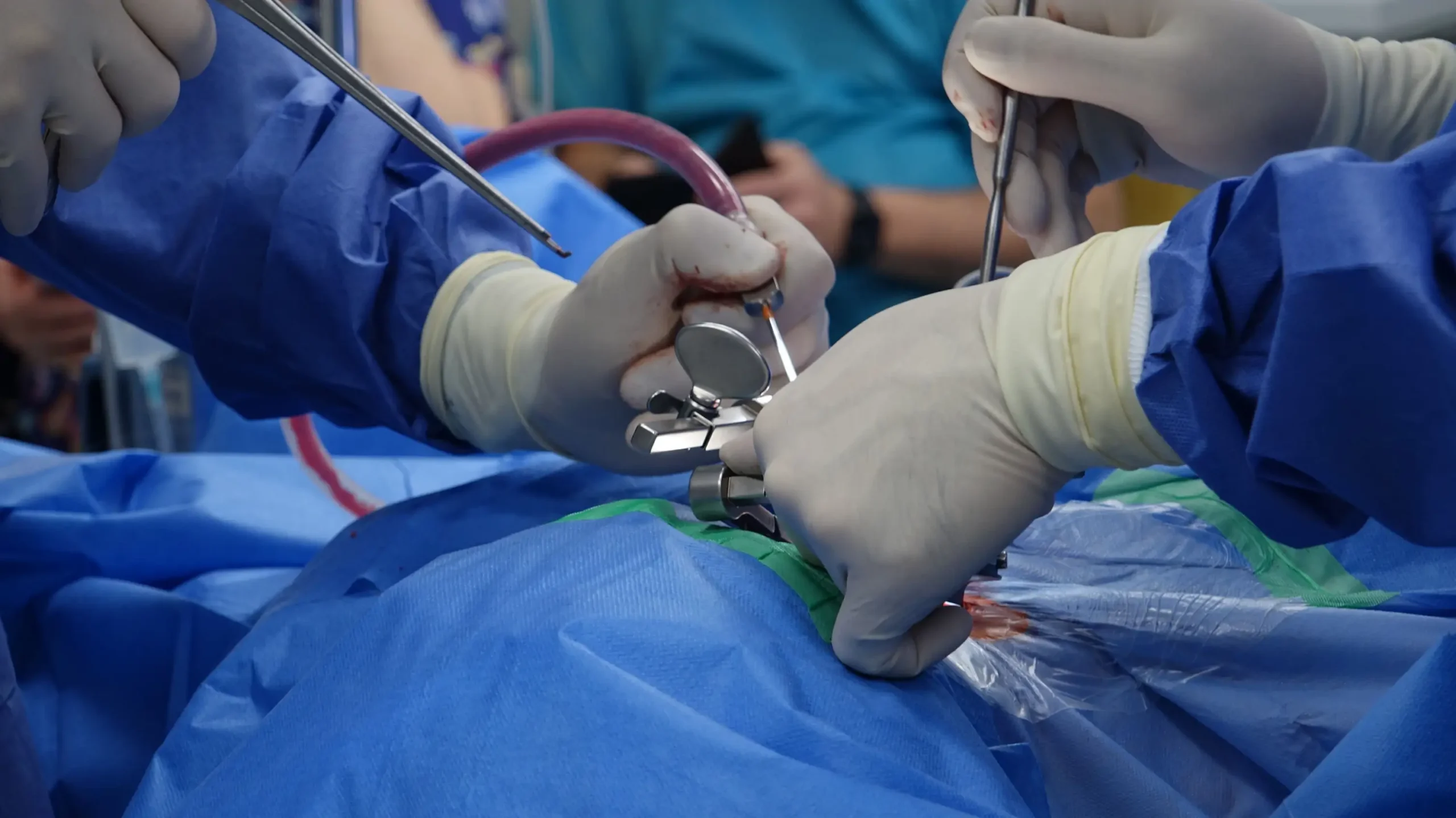
During total knee replacement, the surgeon removes damaged portions of the knee joint and prepares the bone surfaces to receive the artificial components.
The artificial joint is then positioned and stabilized according to the surgical technique and implant system being used.
The exact surgical technique varies between patients.
Your orthopedic surgeon should explain:
- Which type of replacement is planned
- Which implant system will be used
- How the implant will be fixed
- What surgical approach is recommended
- Expected hospital stay
- Expected rehabilitation requirements
How Long Does Knee Replacement Surgery Take?
The duration of surgery varies according to the procedure and the patient’s individual circumstances.
A standard primary knee replacement is generally performed during a single surgical session, but the exact operating time depends on factors such as surgical complexity and whether additional procedures are required.
Rather than focusing only on the number of hours in the operating room, international patients should ask about the complete treatment timeline, including preoperative assessment, hospitalization, early rehabilitation, and follow-up.
How Long Do You Stay in the Hospital After Knee Replacement?
Hospital stay varies depending on the patient’s recovery, medical condition, surgical protocol, and hospital.
Some international-patient programs in Egypt describe hospital stays of approximately 2–5 days for total knee replacement, but this should be treated as a general estimate rather than a guarantee.
Your surgeon should confirm when you are medically ready for discharge.
Knee Replacement Recovery Timeline
Recovery is a gradual process.
First Few Days
The initial focus is usually on:
- Pain management
- Monitoring
- Wound care
- Safe movement
- Walking with assistance
- Beginning physical therapy
Early movement and rehabilitation are important parts of recovery.
First Few Weeks
Patients may gradually increase their activity under the guidance of their medical team.
A walker, crutches, or another mobility aid may be needed temporarily.
The exact timeline varies significantly between patients.
Around 6–12 Weeks
Many patients continue working on:
- Strength
- Knee mobility
- Balance
- Walking ability
- Everyday activities
Progress depends on age, health, preoperative mobility, surgical factors, and commitment to rehabilitation.
Longer-Term Recovery
Full recovery can continue for several months.
Some international orthopedic programs describe substantial rehabilitation continuing for 6–12 months, although individual recovery varies.
Your surgeon and physiotherapist should provide a personalized recovery plan rather than relying solely on a general online timeline.
Physiotherapy After Knee Replacement
Physical therapy is an essential part of recovery for many knee replacement patients.
Rehabilitation may focus on:
- Restoring knee movement
- Building muscle strength
- Improving walking
- Reducing stiffness
- Improving balance
- Returning to daily activities
Before traveling to Egypt, ask whether physiotherapy is included in your treatment package.
If you return home shortly after surgery, ask your orthopedic team how rehabilitation should continue and whether they can provide recommendations or documentation for your local physiotherapist.
How Long Should International Patients Stay in Egypt?
The required stay depends on:
- Surgical recovery
- Medical condition
- Hospital protocol
- Wound care
- Follow-up schedule
- Rehabilitation needs
- Fitness to travel
Some providers recommend international patients plan approximately 10–14 days around a straightforward total knee replacement to allow time for initial recovery and an early postoperative review.
However, this should never be treated as a universal travel rule.
Your surgeon should confirm when you are medically fit to travel.
Can You Fly Home After Knee Replacement?
Air travel after major surgery requires careful planning.
Before booking your return flight, discuss travel with your surgeon.
Your medical team may consider:
- Risk of blood clots
- Current mobility
- Wound condition
- Pain control
- Need for assistance
- Length of flight
- Ability to move during the journey
- Required medications
Do not assume that a particular number of days after surgery automatically makes air travel safe.
Risks and Possible Complications
Knee replacement is a major procedure and, like any surgery, can involve risks.
Potential complications can include:
- Infection
- Blood clots
- Bleeding
- Persistent pain
- Stiffness
- Implant loosening or wear
- Instability
- Nerve or blood-vessel injury
- Need for additional surgery
Your personal risk depends on your health, medical history, procedure, and other factors.
Before surgery, ask the orthopedic surgeon to explain the risks that are particularly relevant to your case.
How to Choose a Knee Replacement Surgeon in Egypt
Choosing the right orthopedic specialist is one of the most important parts of planning treatment abroad.
Consider:
Relevant Specialty
Look for an orthopedic surgeon with appropriate experience in knee and joint replacement.
Procedure-Specific Experience
Ask how frequently the surgeon performs knee replacement and whether they regularly treat cases similar to yours.
Hospital
Confirm exactly where the surgery will take place and investigate the hospital’s facilities and accreditation status.
Treatment Plan
The surgeon should explain why knee replacement is recommended and whether alternatives are available.
Implant
Ask which implant system is proposed and why it is appropriate for your case.
Follow-Up
Understand how postoperative care and rehabilitation will be managed.
Communication
Make sure you can communicate comfortably with your medical team before, during, and after treatment.
What International Patients Should Ask Before Booking
Before traveling to Egypt for knee replacement, ask:
1. Is total or partial knee replacement appropriate for my condition?
2. Which surgeon will perform the procedure?
3. Which hospital will be used?
4. What implant will be used?
5. What is included in the quoted price?
6. How many nights are included in the hospital stay?
7. Is physiotherapy included?
8. How long should I remain in Egypt?
9. When can I safely fly home?
10. What follow-up care will I need after returning home?
11. What happens if I develop a complication after returning home?
12. Are additional procedures or tests likely to affect the cost?
Getting clear answers before traveling can help you plan your treatment more safely and avoid unexpected costs.